N.E.A.T.
Net Expander and Tensioner
Stanford Mechanical Engineering Senior Design Capstone | ME 170 | 2024-2025
In collaboration with the Papahānaumokuākea Marine Debris Project (PMDP)
Laura Sun, Colt Walker, Nathan Tan, Vanessa Chen
Recipient of the 2025 Hoefer Prize for outstanding Stanford undergraduate Writing in the Major
The problem
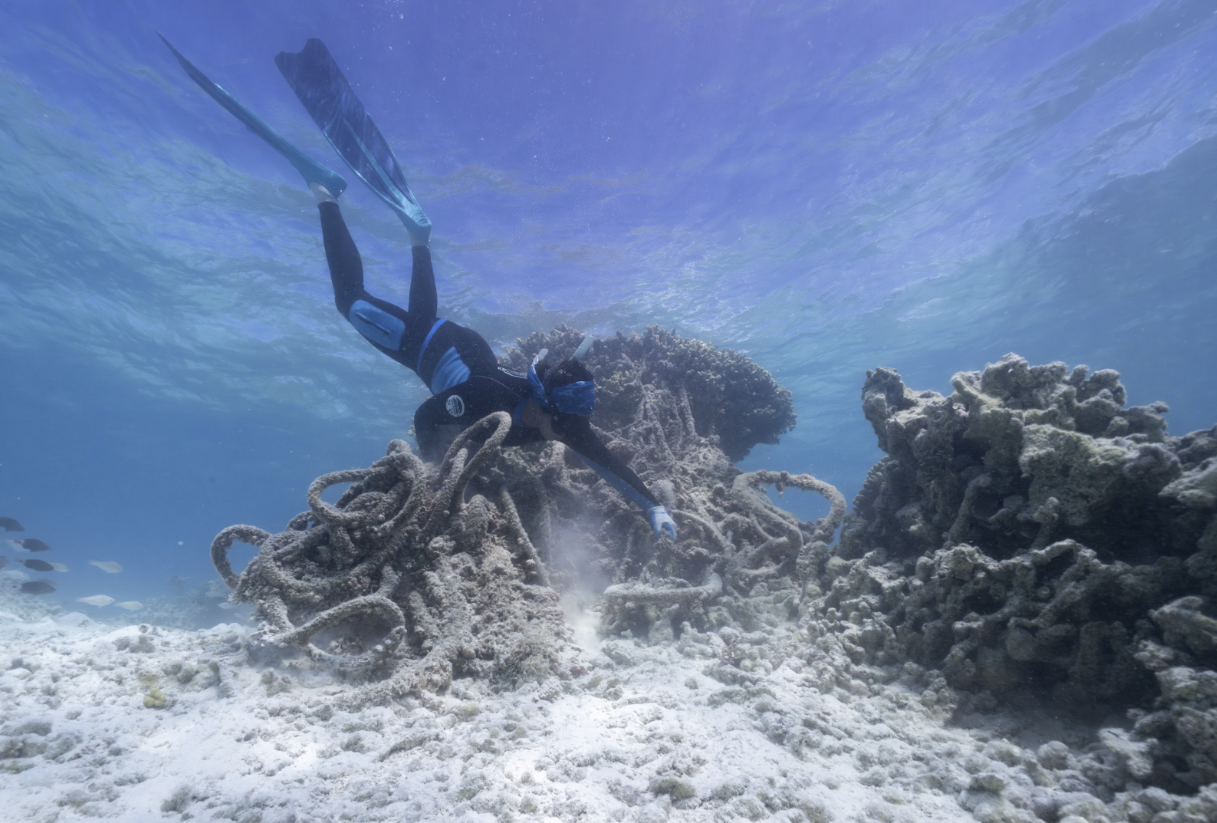
15 million tons of plastic waste enter our oceans every year (the equivalent of 2 full garbage trucks being dumped into the ocean every minute). 46-70% of this waste is abandoned fishing gear, posing significant hazards to many ocean ecosystems. The Papahānaumokuākea Marine National Monument (PMNM), one of the largest marine preserves in the world, is home to many delicate endangered species that are particularly vulnerable to fishing debris.
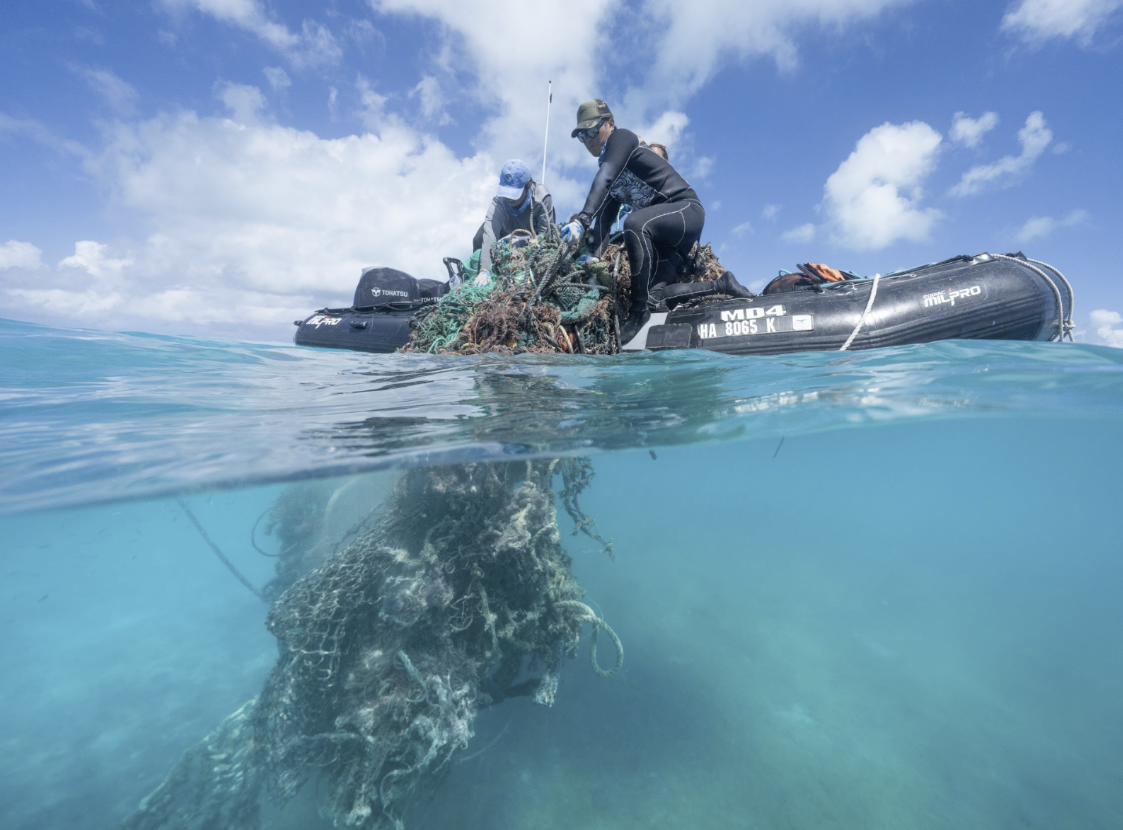
The Papahānaumokuākea Marine Debris Project (PMDP) aims to remove the approximately 431 metric tons of fishing net remaining in the PMNM. Due to shallow coral reefs, they are unable to use large boats with powered equipment. Divers must manually cut the net and hoist it into the small dive boats by hand — a process that is physically difficult and time consuming.
Currently, one diver must manually tension a section of the net with their hands while the other diver saws through it with a large bread knife. Our team was asked to create a better solution that reduced diver exhaustion and improved cutting efficiency.
N.E.A.T.
Net Expander and Tensioner
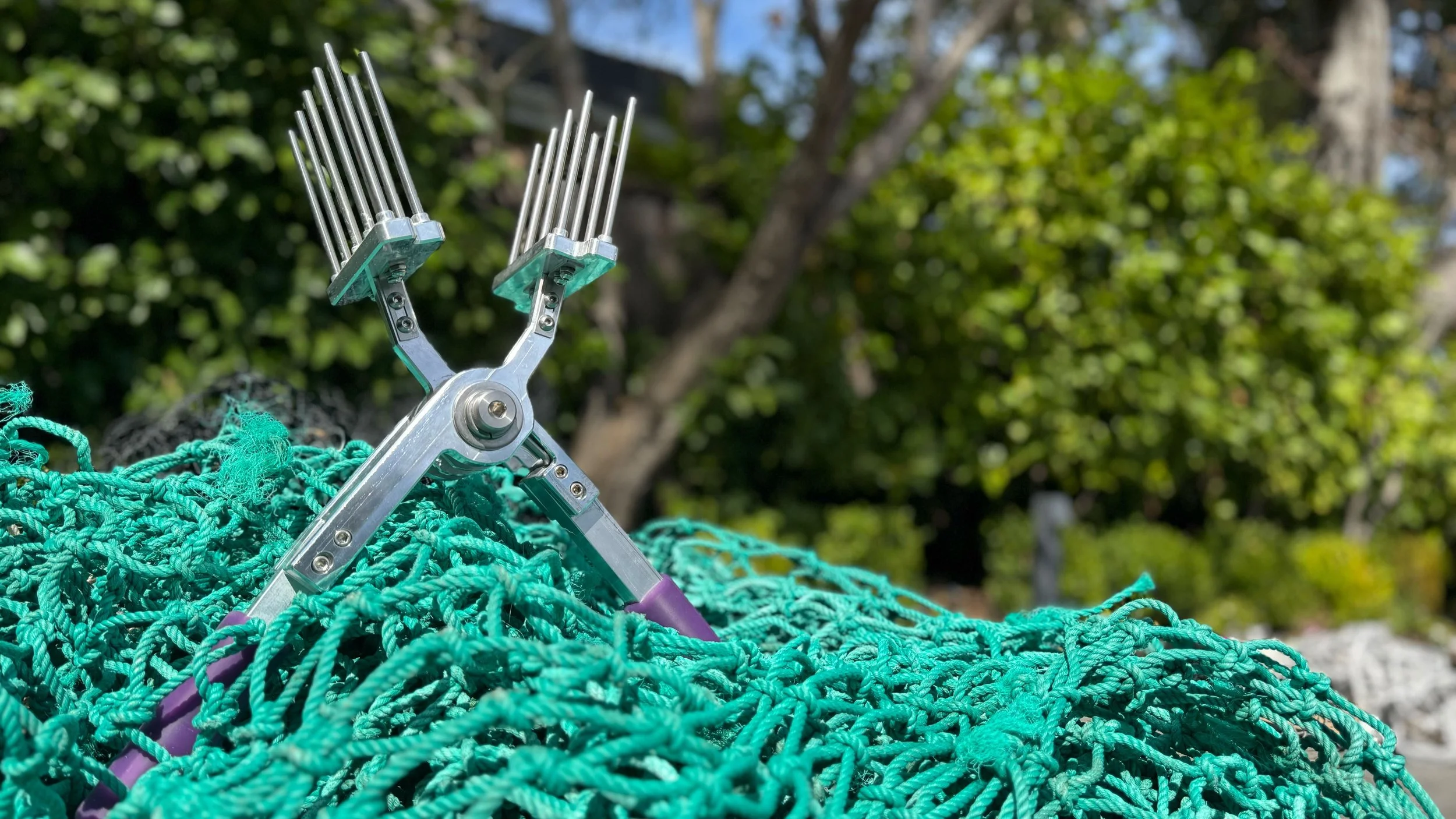
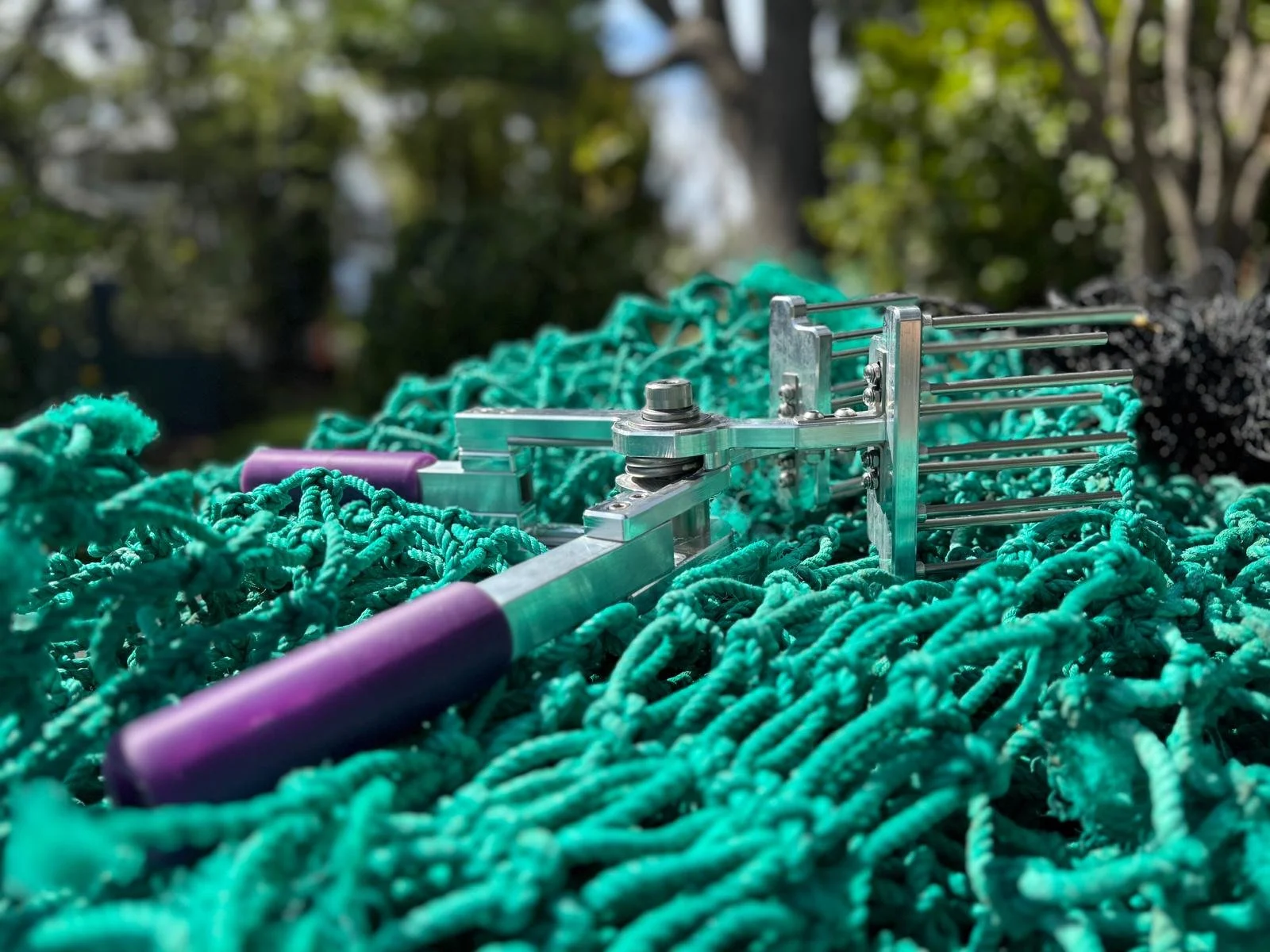
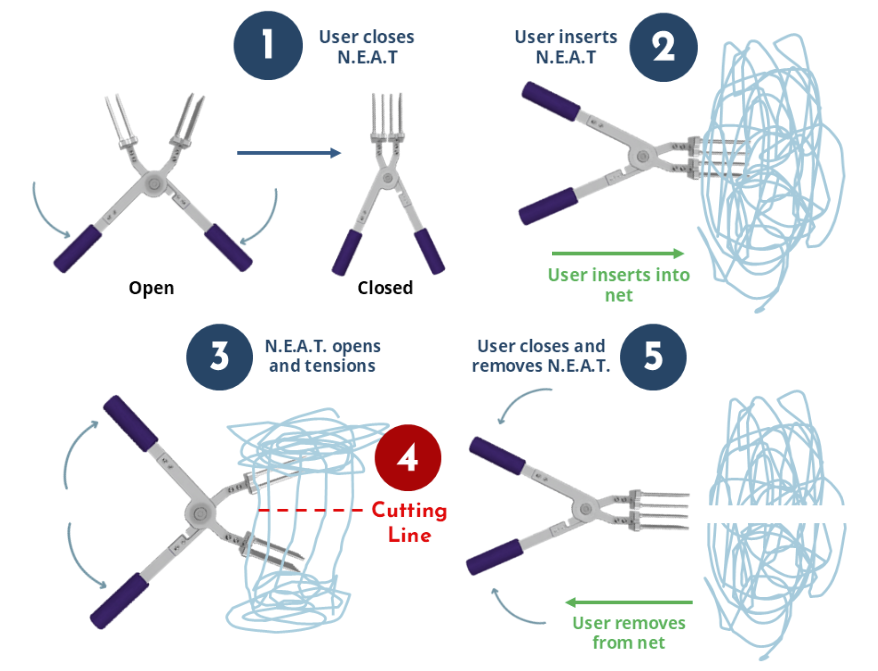
N.E.A.T is a torsion spring-loaded mechanical system that creates tension in a portion of a net bundle. N.E.A.T. is first actuated to the closed position by a diver, then inserted into the net using large fork-like prongs. Once inserted, the device uses a double torsion spring pivot mechanism to automatically open the N.E.A.T. and apply continuous tension until a section of net is stretched, enabling effective cutting with only one diver. After cutting is complete, the diver closes N.E.A.T., removes it from the net, and then repeats the process as necessary.
N.E.A.T. removes the need for a second diver to hold tension on the net, improving efficiency. Comparative time trials confirmed that a single diver using N.E.A.T. could achieve faster net cutting than a two-diver manual operation, with total time decreased by 55%. N.E.A.T. is also compatible with a variety of cutting tools, including the PMDP-preferred bread knife.
N.E.A.T.: A Torsion Spring System to Aid in Cutting and Removing Derelict Trawl Nets in the Papahānaumokuākea Marine National Monument
Recipient of the 2025 Hoefer Prize for outstanding Stanford undergraduate Writing in the Major
Abstract
Derelict fishing nets, commonly known as "ghost nets," constitute 46-70% of marine plastic pollution and pose severe threats to marine ecosystems, particularly in protected areas like the Papahānaumokuākea Marine National Monument (PMNM) in Hawaii. Trawl nets, a type of thick grid fishing net, constitute 80-90% of this derelict fishing gear and often catch on coral reefs or entrap wildlife, causing severe damage or even death. These trawl nets can weigh several hundred pounds when saturated with water, necessitating that they be cut into smaller sections to allow lifting and removal from the ocean. The Papahānaumokuākea Marine Debris Project (PMDP) is a non-profit organization dedicated to cutting and removing these nets in the PMNM. Their current method relies on a team of two divers, one of whom manually tensions the net while the other cuts with a serrated knife in a labor-intensive and inefficient process. To enhance the efficiency and ergonomics of net removal, we developed the Net Expander and Tensioner (N.E.A.T.), a torsion spring-loaded mechanical system that creates tension in a portion of a net bundle. N.E.A.T. is first actuated to the closed position by a diver, then inserted into the net using large fork-like prongs. Once inserted, the device uses a double torsion spring pivot mechanism to automatically open the N.E.A.T. and apply continuous tension until a section of net is stretched, enabling effective cutting with only one diver. After cutting is complete, the diver closes N.E.A.T., removes it from the net, and then repeats the process as necessary. Experimental testing verified that N.E.A.T. applies 59.43 pounds of force when fully actuated, more than the 30 pounds of force required. Pronged net interfaces arranged in a staggered formation enable both easy insertion and removal and rapid net cutting, while ensuring compatibility with a variety of trawl net mesh sizes, strand thicknesses, and materials, representing the breadth of trawl nets encountered. Comparative time trials confirmed that a single diver using N.E.A.T. could achieve faster net cutting than a two-diver manual operation, with total time decreased by 55%. By decreasing the time and physical effort required for net removal, N.E.A.T. has the potential to improve PMDP’s operational efficiency and reduce diver fatigue. Future work includes full fabrication of the tool in stainless steel, ergonomic and weight reduction optimizations, reduction of assembly complexity to decrease manufacturing cost, and fabrication of multiple units for simultaneous use by multiple PMDP dive crews.